Tucking your baby into bed with a bottle seems like a harmless comfort that helps them drift off to sleep peacefully. Yet this nightly ritual could be silently destroying their teeth from the moment they erupt. Baby bottle tooth decay—clinically known as early childhood caries—affects thousands of infants and toddlers across Wisconsin each year, often going unnoticed until cavities cause pain, infection, and complications that impact both baby teeth and the permanent teeth developing beneath them.
The surprising truth is that breast milk, formula, and even 100% fruit juice all contain sugars that pool around your baby’s teeth during sleep, creating the perfect environment for decay-causing bacteria to thrive. At Wauwatosa Family Dental, Dr. Aimee Endean frequently treats young patients whose parents had no idea that bedtime bottles posed such serious risks. Understanding how baby bottle tooth decay develops—and knowing the simple steps
Why Baby Teeth Matter More Than You Think
Some parents assume baby teeth don’t warrant much concern since they’ll eventually fall out anyway. This dangerous misconception can lead to neglect causing years of problems. Baby teeth serve crucial functions throughout childhood, and losing them prematurely creates consequences extending into the teenage years.
Healthy primary teeth enable proper chewing and nutrition, allowing children to eat balanced diets necessary for growth. Speech development relies heavily on teeth, and children who lose front teeth early often develop impediments requiring therapy. Most importantly, baby teeth hold space for permanent teeth to erupt correctly. When lost too early, surrounding teeth shift into gaps, creating crowding that necessitates extensive orthodontic treatment later.
The lifetime cost to treat a single baby tooth lost to decay can reach $20,000 when factoring in space maintainers and orthodontics. Children suffering from dental pain struggle to eat, sleep, play, and concentrate in school—affecting overall health during critical developmental years.
How Baby Bottle Tooth Decay Develops
Baby bottle tooth decay typically affects the upper front teeth most severely, though any tooth can be impacted. When babies fall asleep with bottles containing milk, formula, or juice, liquid pools in their mouths and continuously bathes teeth in sugar. Bacteria feed on these sugars, multiply rapidly, and produce acid that attacks tooth enamel, causing decay.
Early signs parents can watch for include white chalky spots along the gumline, brown or black discoloration as decay progresses, visible holes in teeth, and swollen or bleeding gums indicating infection. Parents often don’t notice these warning signs until decay reaches advanced stages, highlighting why regular dental checkups beginning with first tooth eruption are essential.
The Bacterial Transmission You Didn’t Know About
Baby bottle tooth decay is an infectious disease transmitted from parents and caregivers to infants. Streptococcus mutans bacteria doesn’t naturally exist in babies’ mouths at birth. Adults inadvertently pass these cavity-causing bacteria through saliva when sharing spoons, cleaning pacifiers with their mouth, or allowing babies to put fingers in their mouth after touching adult saliva.
Children who acquire these bacteria earlier face significantly higher cavity risks throughout childhood. Reducing bacterial transmission through simple hygiene practices dramatically lowers your child’s risk. Use separate utensils, wash pacifiers with soap and water rather than your mouth, and maintain your own oral health since parents with untreated cavities harbor higher bacteria levels.
Practical Prevention Strategies for Busy Parents
Preventing baby bottle tooth decay requires consistent habits rather than complicated procedures. These straightforward steps, when implemented from birth, protect your child’s teeth throughout infancy and toddlerhood.
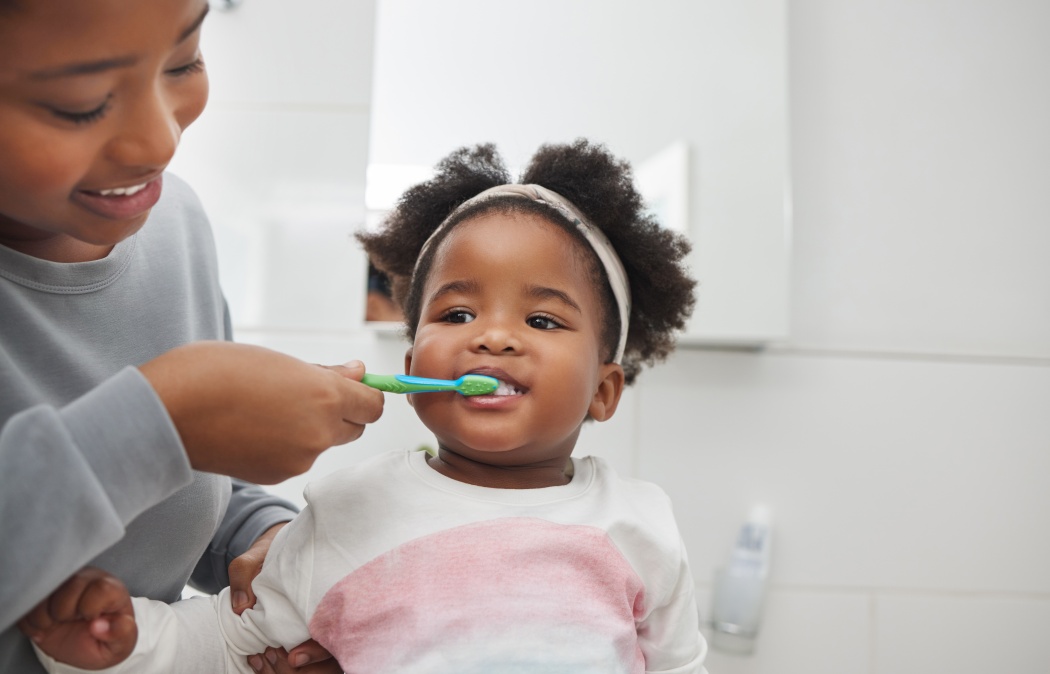
Begin oral care before teeth even erupt by wiping your baby’s gums with a clean, damp washcloth or gauze pad after each feeding. This removes sugar residue and establishes oral hygiene as part of the daily routine. Once the first tooth appears—typically around six months—start brushing twice daily with a soft infant toothbrush and a rice grain-sized smear of fluoride toothpaste.
Bottle-feeding guidelines that prevent tooth decay:
- Bedtime Bottles: Only water should go in bottles during sleep, never milk, formula, or juice that coat teeth in sugar throughout the night.
- Finish Before Sleep: Complete bottle feeding before naptime or bedtime, then brush teeth afterward so babies don’t fall asleep with sugary liquids pooling in their mouths.
- Wean from Bottles: Transition children to sippy cups around their first birthday and eliminate bottles entirely by 18 months to reduce prolonged sugar exposure.
- Limit Juice: The American Academy of Pediatrics recommends no juice before 12 months, and only 4 ounces daily for toddlers aged one to three, served at mealtimes rather than throughout the day.
If your baby requires something soothing at bedtime, offer a clean pacifier or lovey instead of a bottle. For children who strongly resist giving up nighttime bottles, gradual weaning works better than sudden changes—slowly dilute milk or formula with increasing amounts of water over several weeks until the bottle contains only water.
When to Start Dental Visits
The American Academy of Pediatric Dentistry recommends children see a dentist by their first birthday or within six months of the first tooth erupting. These early visits allow pediatric dentists to assess oral development, identify decay risk factors, provide fluoride treatments, and educate parents about proper care techniques.
Dr. Endean’s gentle approach helps even the youngest patients feel comfortable. Early visits establish your child’s “dental home”—an ongoing relationship where development is monitored and problems are caught early. Parents sometimes delay first visits because they don’t see problems, but prevention is the point. Dentists spot early warning signs invisible to untrained eyes and intervene before cavities form.
Taking Action in Wauwatosa and Brookfield
Baby bottle tooth decay is entirely preventable with the right knowledge and consistent habits. Your child depends on you to establish healthy oral care routines that set the foundation for a lifetime of dental health. Small changes—like putting only water in bedtime bottles, wiping gums after feedings, and scheduling that first dental visit—make dramatic differences in long-term outcomes.
If you’re expecting a baby or have an infant or toddler in Wauwatosa or Brookfield, now is the perfect time to prioritize their oral health. At Wauwatosa Family Dental, our team provides compassionate, comprehensive pediatric dental care in a welcoming environment where even the youngest patients feel comfortable. Dr. Endean’s experience treating children ensures your family receives expert guidance and gentle care. Call (414) 842-4837 today to schedule your child’s first dental visit and learn personalized strategies for protecting their smile from day one.
Posted on behalf of
11904 W North Ave #105
Wauwatosa, WI 53226
Phone: (414) 454-0700
Email: office@wauwatosafamilydental.com
Opening Hours
Mon: 8:00am – 6:00pm
Tues: 8:00am – 5:00pm
Wed: 8:00am – 6:00pm
Thu: 8:00am – 5:00pm
Fri: 8:00am – 2:00pm